
Table of Contents
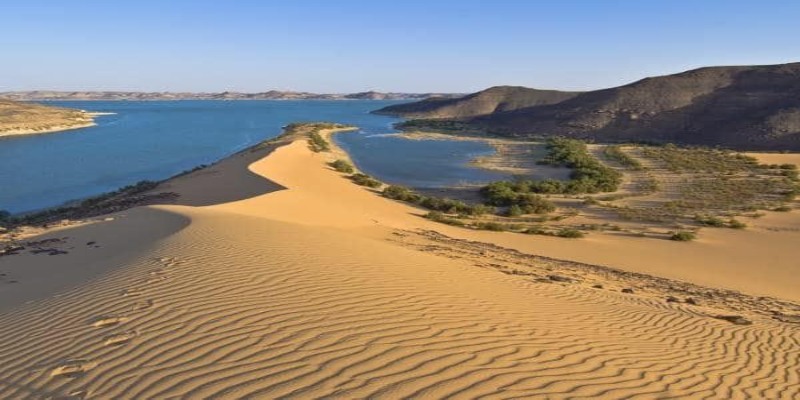
ToggleNyiri Desert is among the most Popular Deserts in Kenya together with Chalbi Desert. It is often referred to as Taru Desert or the Nyika Desert and is located in South-Central Kenya. According to the most recent survey and statistics, this Nyiri Desert occupies and area of around 10,000 hectares.
A majority of people who search for Nairobi Desert end up touring Nyika Desert because it is the closest semi-arid zone to the city.
In this blog post, ‘Nyiri Desert Kenya: A Complete Guide’ we as Zunguka Africa Safaris travel guides are going to identify where Nyika Desert is located, how to get to Nyiri Desert, identify animals that can be found there and list down three reasons why you should visit Nyiri Desert.
Also, this blog will identify the Best time to Visit Nyiri Desert and identify several Fun Activities to do in Nyiri Desert.
Facts & Knowledge: Nyiri is a Swahili word that refers to bushland, wilderness or hinterland. It is used interchangeably with Nyika. So, Nyiri Desert also refers to Nyika Desert.
The Nyika Desert or Taru Desert is a highland plateau bushland that is located on the leeward side of Mount Kilimanjaro in South-Central Kenya.
Specifically, Nyika Desert can be found towards the east of Lake Magadi, between Tsavo West, Amboseli and Nairobi National Parks. Most tourists refer to Nyika Desert as Nairobi Desert because it takes less than 5 hours to travel from Nairobi to Nyiri via a road transfer.
So, how does one get to Nyiri Desert Kenya?
From Nairobi to Nyiri Desert, the total distance is 189 kilometers. As mentioned earlier on, it takes an average of 5 hours for a road transfer to ‘Nairobi Desert‘ from the CBD
For tourists who prefer to fly, there are no direct flights to Nyiri Desert. However, the most convenient and closest airstrip to this location is Amboseli Airstrip. Thereafter, tourists can be transferred by road to Nyiri Desert.
So, which wild animals can be found in Nyiri Desert?
Despite being an arid area, the Nyiri Desert is home to several wild animals including mammals such as the Elephants which can be seen crossing the Amboseli and Tsavo ecosystems.
Big cats such as lions and leopards can be spotted during the rainy and cooler seasons of the year while preying on preys such as zebras and impalas.Other animals that can be spotted here include the Lesser Kudu, Oryx and Gerenuk.
During your Kenya Desert Safari to Nyiri Desert, be prepared to see more wild animals depending on the time of the year. We as Zunguka Africa Safaris recommend that you should carry a pair of binoculars and enough safari clothes to ensure that you won’t miss any action during the tour.
Nyiri Desert (Taru Desert) has several spots where tourists can take amazing photographs and create memories. A good example is Noomotio an observation hill perfect for photos that capture a 360-degree panoramic view of Nyika Desert. Noomotio also offers a perfect backdrop of the stunning Mount Kilimanjaro.
The Baobab trees are also a good spot to take photographs. Their unique structure and alien presence offers a good background for desert photography. Another amazing thing about these trees is that they thousands of years old with some crossing the 2,000 mark.
In case you want to unique photographs, you should visit Nyika Desert during the seasonal blooms of April and December. During this time, the desert floor turns to a colorful landscape full of white convolvulus and arras of blue flowers after the rains.
The Nyiri Desert is home to ancient paths that have exposed bedrocks and the desert soil is red in color. A desert safari to Nyiri desert gives you the chance to spot the red soil, learn more about it’s formation and composition.
During my last visit to the Nyiri, I was able to learn that this soil forms as a result of the weathering of volcanic rocks. I was also able to learn that this rocks are rich in minerals such as iron. I was also able to learn that the Masai people use it for ceremonial body art.
Warning for Travelers: The red soil might get into your clothes, camera gear or shoes. While exploring these soils, you should protect yourself by using a UV filter and avoid swapping lenses while outside.
Asides from exploring this arid zone, other fun activities you can do in your Nyiri Desert trip include;
The best time to visit Nyiri Desert Kenya is during the dry seasons. The long dry season (June – October) and the short dry season (January – February).
During both the long and dry seasons, the skies are very clear as well as the horizons, this makes it easy to see the edges of the desert and wild animals easily.
In case you are looking for unique sceneries that do not reflect Nyiri as a desert, you should try the miracle bloom season that occurs between Late November, & April – May. During this time, the desert floor turns overnight from grey-silver color to green. It becomes carpeted with millions of blue and white flowers.
The worst time to visit Nyiri Desert is during the rainy season where there are flash floods and cars including 4×4 might get stuck.
For bookings and inquiries about our Safari packages to Nyiri Desert, you can send us an e-mail at info@zungukasafaris.com